Ali Bigdelou
|
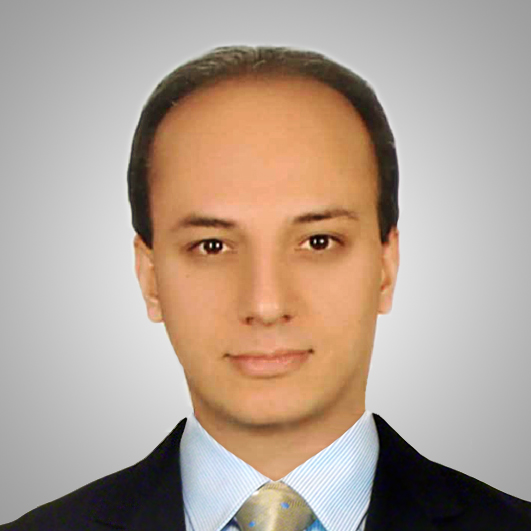
Ali Bigdelou Dr. rer. nat. (Computer Science)
|
Background
| Since 2013 | Development Specialist and Software Architect at BMW Group, Forschungs- und Innovationszentrum. |
| 2009-2012 | Ph.D. candidate at the CAMPAR team Technische Universität München, with Prof. Dr. Nassir NAVAB. |
| 2005-2008 | Master of Science Degree in Computer Science from the Faculty of Science of Tehran University, Iran. |
| 2001-2005 | Bachelor of Science Degree in Computer Science from the Faculty of Science of Tehran University, Iran. |
| 1997-2001 | Diploma in Mathematics and Physics from Danesh High School, Tehran, Iran. |
Research projects
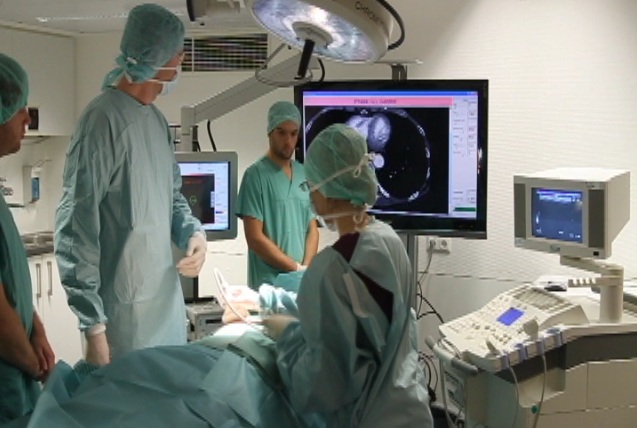 |
Intra-operative Human Computer Interaction and Usability EvaluationsComputerized medical systems play a vital role in the operating room, yet surgeons often face challenges when interacting with these systems during surgery. In this project we are aiming at analyzing and understanding the Operating Room specific aspects which affect the end user experience. Beside operating room specific usability evaluation approaches in this project we also try to improve the preliminary intra-operative user interaction methodologies. |
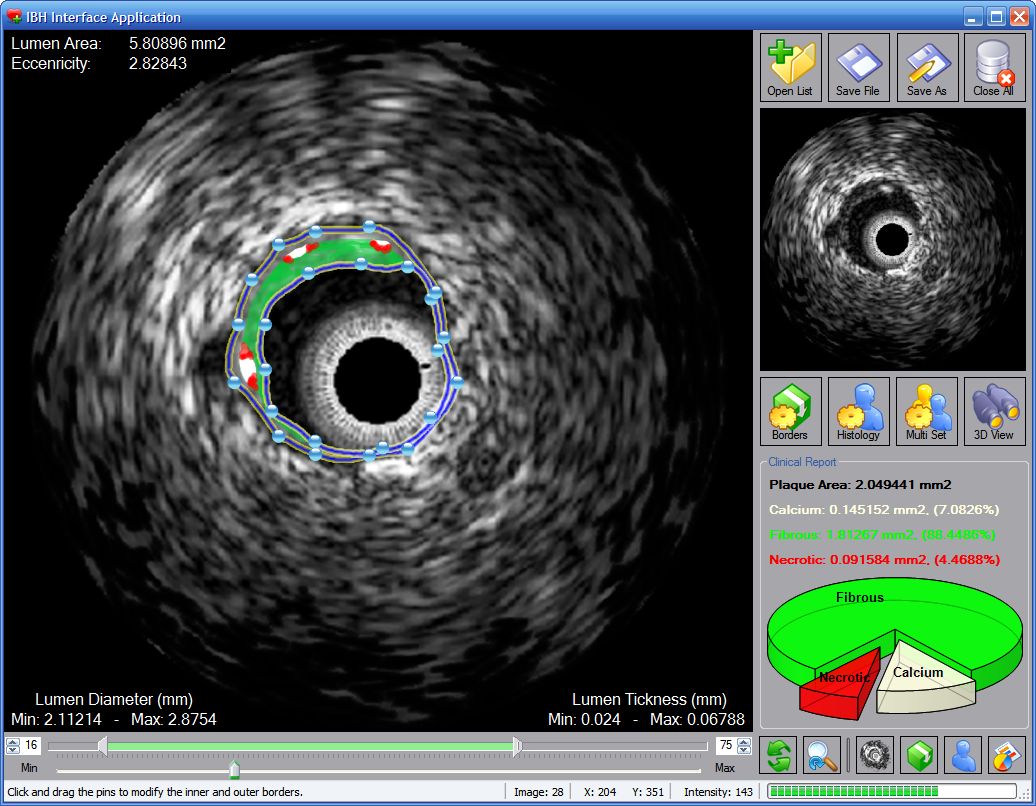 |
Improvement and Automatic Classification of IVUS-VH (Intravascular Ultrasound – Virtual Histology) ImagesHeart attack and stroke are the major causes of human death and atherosclerotic plaques are the most common effect of cardiovascular disease. Intravascular ultrasound (IVUS), a diagnostic imaging technique, offers a unique view of the morphology of the arterial plaque and displays the morphological and histological properties of a cross-section of the vessel. Limitations of the grayscale IVUS manual plaque assessment have led to the development of quantitative techniques for analysis of characteristics of plaque components. In vivo plaque characterization with the so called Virtual Histology (VH)-IVUS, which is based on the ultrasound RF signal processing, is widely available for atherosclerosis plaque characterization in IVUS images. However, it suffers from a poor longitudinal resolution due to the ECG-gated acquisition. The focus of this PhD work is to provide effective methods for image-based vessel plaque characterization via IVUS image analysis to overcome the limitations of current techniques. The proposed algorithms are also applicable to the large amount of the IVUS image sequences obtained from patients in the past, where there is no access to the corresponding radio frequency(RF) data. Since the proposed method is applicable to all IVUS frames of the heart cycle, therefore it outperforms the longitudinal resolution of the so called VH method. |
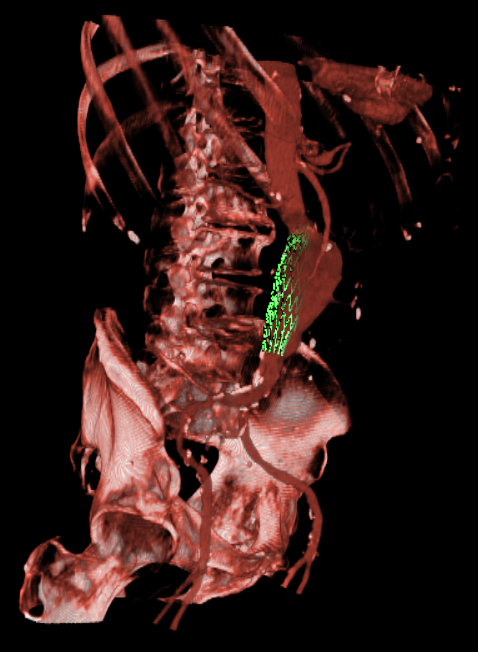 |
Endovascular Stenting of Aortic AneurysmsEndovascular stenting is a minimally invasive treatment technique for aortic aneurysms or dissections. Thereby, a certain aortic prosthesis (stent graft) is placed inside the aortic aneurysm in order to prevent a life-threatening rupture of the aortic wall. Prior to the intervention, a computed tomography angiography (CTA) is acquired on which the surgical staff can measure the parameter of the desired stent graft and finalize the intervention workflow. The entire interventional catheter navigation is done under 2D angiography imaging where the physician is missing the important 3D information. The purpose of our project is two-fold:1. In the planning phase, a modified graph cuts algorithm automatically segments the aorta and aneurysm, so the surgical staff can choose an appropriate type of stent to match the segmented location, length, and diameter of the aneurysm and aorta. By visualizing the defined stent graft next to the three-dimensionally reconstructed aneurysm, mismeasurements can be detected in an early stage. Our main goal is the creation of an interactive simulation system that predicts the behaviour of the aortic wall and the movement of the implanted stent graft. 2. During implantation of the stent graft, after an intensity based registration of CTA and angiography data, the current navigation can be visualized in the 3D CT data set at any time. This includes solutions for electro-magnetic tracking of catheters as well as guide wires and stent grafts. Eventually, Our main goal is the creation of solutions that enable the surgeon to enhance the accuracy of the navigation and positioning, along with a minimum use of angiography, leading to less radiation exposure and less contrast agent injection. |
Teaching
In the following lectures I participate as a lecturer:- SS 2012: Lab Course / Praktikum: Project Management and Software Development for Medical Applications
- WS 2011/12: Lab Course / Praktikum: Project Management and Software Development for Medical Applications
Publications
| 2012 | |


|
A. Bigdelou, L. Schwarz, T. Benz, N. Navab
A Flexible Platform for Developing Context-Aware 3D Gesture-based Interfaces International ACM Conference on Intelligent User Interfaces (IUI), Lissabon, Portugal, February 2012 (bib) |
|
|
A. Bigdelou, L. Schwarz, N. Navab
An Adaptive Solution for Intra-operative Gesture-based Human-Machine Interaction International ACM Conference on Intelligent User Interfaces (IUI), Lissabon, Portugal, February 2012 (bib) |
|
|
A. Bigdelou, T. Benz, L. Schwarz, N. Navab
Customizable Gesturing Interface for the Operating Room using Kinect ChaLearn Gesture Challenge, CVPR Workshop on Gesture Recognition, Providence, Rhode Island, June 2012 (bib) |


|
A. Bigdelou, R. Stauder, T. Benz, A. Okur, T. Blum, R. Ghotbi, N. Navab
HCI Design in the OR: A Gesturing Case-study MICCAI 2012 Workshop on Modeling and Monitoring of Computer Assisted Interventions (M2CAI), Nice, France, October 2012 (bib) |
|
|
A. Bigdelou, A. Okur, M.-E. Hoffmann, B. Azizi, N. Navab
Towards systematic usability evaluations for the OR: an introduction to OR-Use framework Information Processing in Computer Assisted Interventions (IPCAI), Pisa, Italy, June 27, 2012 (bib) |
|
|
A. Bigdelou, A. Katouzian, N. Navab
Model-based visualization of usability data to support analysis in complex domains 21th International Conference of Usability Professionals Association (UPA), Henderson, Nevada, USA, June 2012 (bib) |
|
|
A. Bigdelou, T. Benz, L. Schwarz, N. Navab
Simultaneous Categorical and Spatio-Temporal 3D Gestures Using Kinect IEEE Symposium on 3D User Interfaces (3DUI), Orange County, CA, March 2012 (bib) |

|
R. Stauder, V. Belagiannis, L. Schwarz, A. Bigdelou, E. Soehngen, S. Ilic, N. Navab
A User-Centered and Workflow-Aware Unified Display for the Operating Room MICCAI Workshop on Modeling and Monitoring of Computer Assisted Interventions (M2CAI), Nice, France, October 2012 (bib) |
| 2011 | |
| A. Okur, A. Ahmadi, A. Bigdelou, T. Wendler, N. Navab
MR in OR: First analysis of AR/VR visualization in 100 intra-operative Freehand SPECT acquisitions The 10th IEEE and ACM International Symposium on Mixed and Augmented Reality (ISMAR), Basel, Switzerland, Oct. 26 - 29, 2011. (bib) |
|
|
|
A. Bigdelou, T. Sterner, S. Wiesner, T. Wendler, F. Matthes, N. Navab
OR Specific Domain Model for Usability Evaluations of Intra-Operative Systems Information Processing in Computer Assisted Interventions (IPCAI), Berlin (DE), June 22, 2011 (bib) |
|
|
L. Schwarz, A. Bigdelou, N. Navab
Learning Gestures for Customizable Human-Computer Interaction in the Operating Room Medical Image Computing and Computer Assisted Intervention (MICCAI), Toronto, Canada, September 2011 (bib) |
| S. Demirci, A. Bigdelou, L. Wang, C. Wachinger, M. Baust, R. Tibrewal, R. Ghotbi, H-H. Eckstein, N. Navab
3D Stent Recovery from One X-ray Projection 14th International Conference on Medical Image Computing and Computer Assisted Intervention (MICCAI), Toronto (CA), September 18-22, 2011 (bib) |
|
| 2009 | |
| A. Taki, A. Bigdelou, A. Roodaki, S.K. Setarehdan, G. Unal, N. Navab
A new tool for automated border detection and characterization of atherosclerotic plaque Composition in IVUS Images Computers in Cardiology(CinC? 2009), Park City, Utah,September 13-16, 2009 (bib) |
|
|
|
A. Bigdelou, A. Ladikos, N. Navab
Incremental Visual Hull Reconstruction British Machine Vision Conference (BMVC), London (UK), September 7-10, 2009 (bib) |
| 2008 | |
|
|
A. Bigdelou, A. Ladikos, N. Navab
Shape from Silhouette in Dynamic Scenes Technical Report at Technical University of Munich (TUM), Munich (DE), August 15, 2008 (bib) |

| UsersForm | |
|---|---|
| Title: | Dr. |
| Circumference of your head (in cm): | |
| Firstname: | Ali |
| Middlename: | |
| Lastname: | Bigdelou |
| Picture: |  |
| Birthday: | |
| Nationality: | Iran |
| Languages: | English, German, Persian |
| Groups: | Surgical Workflow, Computer-Aided Surgery, Computer Vision, Medical Augmented Reality, 3D Information Presentation, 3D Interaction, HCI in Cars, System Architectures for Ubiquitous Augmented Reality, Machine Learning for Medical Applications |
| Expertise: | Surgical Workflow, Computer-Aided Surgery, 3D Interaction, HCI in Cars, System Architectures for Ubiquitous Augmented Reality |
| Position: | Scientific Staff |
| Status: | Alumni |
| Emailbefore: | ali.bigdelou |
| Emailafter: | cs.tum.edu |
| Room: | IFL |
| Telephone: | |
| Alumniactivity: | Development Specialist and Software Architect at BMW Group, Forschungs- und Innovationszentrum. |
| Defensedate: | 20 November 2012 |
| Thesistitle: | Operating Room Specific Domain Model for Usability Evaluations and HCI Design |
| Alumnihomepage: | |
| Personalvideo01: | |
| Personalvideotext01: | |
| Personalvideopreview01: | |
| Personalvideo02: | |
| Personalvideotext02: | |
| Personalvideopreview02: | |
