
|
Olivier Pauly
Dr.rer.nat.
| E-Mail: |
|
| Phone: |
+49 89 289 19437 |
| Address: |
Technische Universität München
Fakultät für Informatik, I-16
Boltzmannstr. 3
85748 Garching b. München
Germany
|
| Room: |
MI 03.13.043 |
|
|
|
|
Research interests
- Machine learning in medical applications
- Pattern recognition and analysis
- Medical image understanding
- Tissue classi�cation
- Computer aided diagnosis
- Similarity, metric, distance learning
|
Active research projects
|
|
News
|
- 25.05.2013 : We have one paper accepted at MICCAI conference.
- 10.05.2013 : We have two oral presentation at 3DV conference.
- 01.05.2013 : I started as an Application Developer @ Definiens, AG
- 30.08.2012 : Ph.D. Defense successfully achieved

- 27.07.2012 : Ph.D. Defense scheduled on Thursday 30th of August.
- 23.07.2012 : One journal paper accepted in Ultrasound Med Biol.
- 15.07.2012 : One paper accepted at MICCAI workshop Medical Computer Vision.
- 01.07.2012 : We have one paper accepted to MICCAI and one paper to ECCV.
- 01.03.2012 : We have open Master thesis topics (see description below). If you are interested, please send me an email or come by to my office.
- 29.12.2011 : I submitted my Ph.D. thesis
- 24.11.2011 : The first draft of my Ph.D. thesis is under construction
- 01.11.2011 : I am now finishing my Ph.D. within Joint Helmholtz/TUM research group
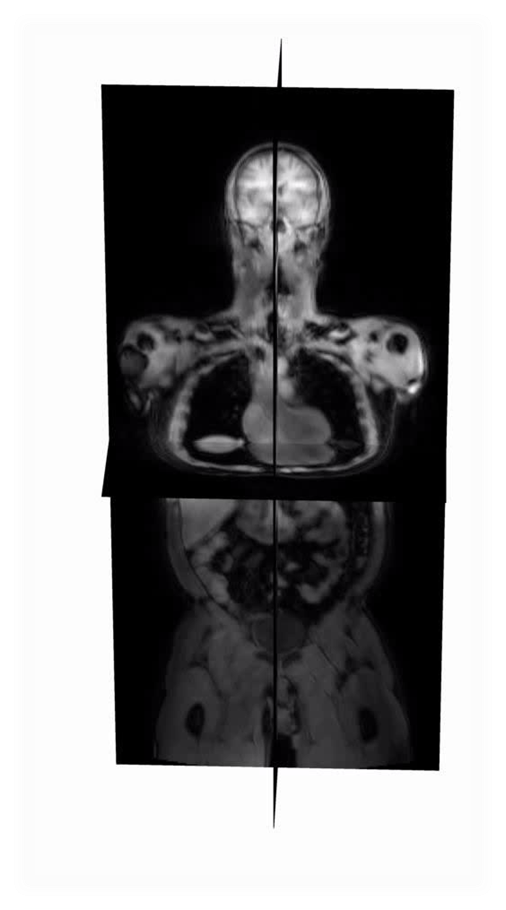
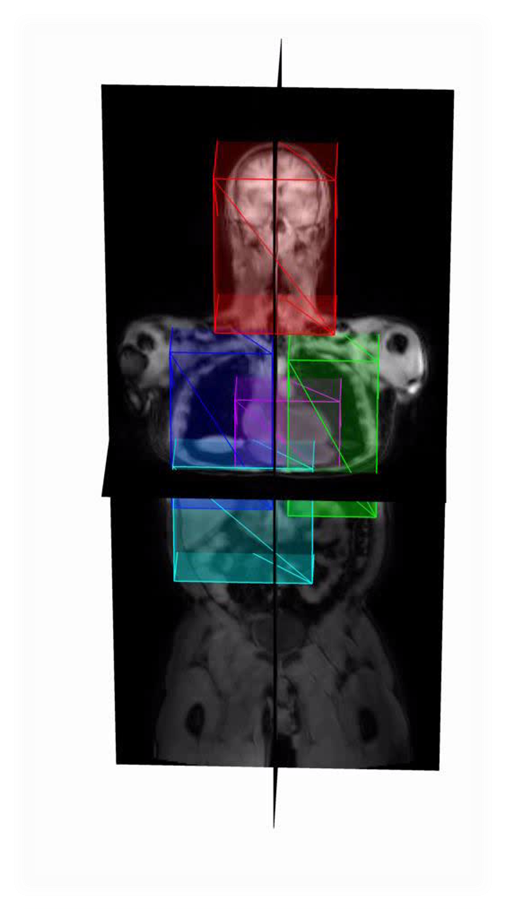
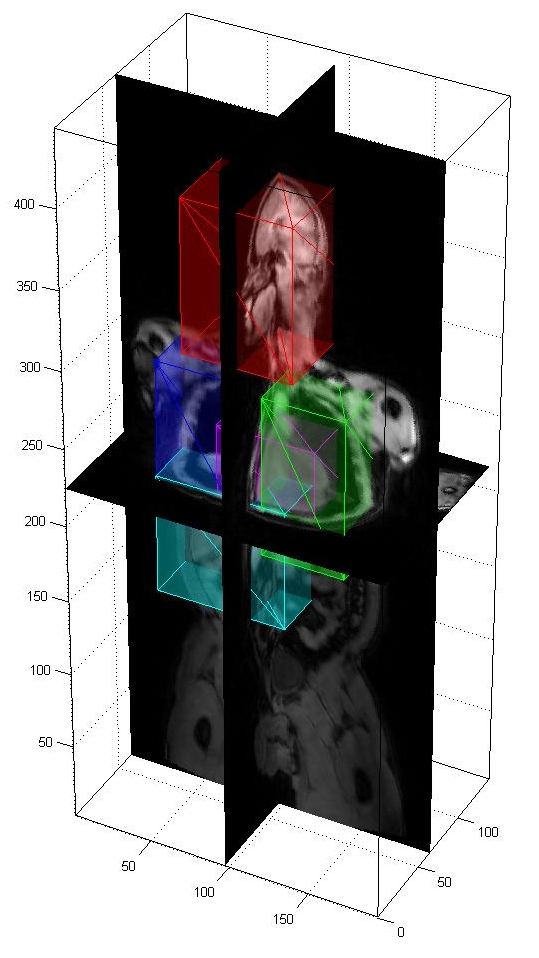
- 19.09.2011 : Oral presentation at MICCAI 2011 in Toronto for our paper on Multiple Organ Localization. Our work was among the runners up for a young scientist award.
Here you can find the slides of my presentation: paulyMICCAI2011presentation.pdf
- 01.08.2011 : I am at Microsoft Research Cambridge as a Research intern - 3 months
Publications
| 2015 |

|
L. Peter, O. Pauly, P. Chatelain, D. Mateus, N. Navab
Scale-Adaptive Forest Training via an Efficient Feature Sampling Scheme
Proceedings of the 18th International Conference on Medical Image Computing and Computer Assisted Intervention (MICCAI), Munich, Germany, October 2015
(bib)
|
| 2014 |
|
O. Pauly, B. Diotte, P. Fallavollita, S. Weidert, E. Euler, N. Navab
Machine Learning-based Augmented Reality for Improved Surgical Scene Understanding.
Computerized Medical Imaging and Graphics
(bib)
|
|
O. Pauly, B. Diotte, S. Habert, S. Weidert, E. Euler, P. Fallavollita, N. Navab
Visualization inside the operating room: 'Learning' what the surgeon wants to see
The 5th International Conference on Information Processing in Computer-Assisted Interventions (IPCAI)
(bib)
|
| 2013 |
|
P. Chatelain, O. Pauly, L. Peter, A. Ahmadi, A. Plate, K. Bötzel, N. Navab
Learning from Multiple Experts with Random Forests: Application to the Segmentation of the Midbrain in 3D Ultrasound
Proceedings of the 16th International Conference on Medical Image Computing and Computer Assisted Intervention (MICCAI), Nagoya, Japan, September 2013
(bib)
|
|
|
C. Rupprecht, O. Pauly, C. Theobalt, S. Ilic
3D Semantic Parameterization for Human Shape Modeling: Application to 3D Animation. (Oral Presentation)
In Proc. International Conference on 3D Vision (3DV 2013)
(bib)
|
|
|
J. Lallemand, O. Pauly, L. Schwarz, D. J. Tan , S. Ilic
Multi-task Forest for Human Pose Estimation in Depth Images. (Oral Presentation)
In Proc. International Conference on 3D Vision (3DV 2013)
(bib)
|
|
O. Erat, O. Pauly, S. Weidert, P. Thaller, E. Euler, W. Mutschler, N. Navab, P. Fallavollita
How a Surgeon becomes Superman by visualization of intelligently fused multi-modalities
SPIE Medical Imaging, Orlando, Florida, USA, February 2013
(bib)
|
| 2012 |
|
O. Pauly, A. Katouzian, A. Eslami, P. Fallavollita, N. Navab
Supervised Classification for Customized Intraoperative Augmented Reality Visualization
The 11th IEEE and ACM International Symposium on Mixed and Augmented Reality (ISMAR), Atlanta, USA, Nov. 5 - 8, 2012.
(bib)
|
|
B. Glocker, O. Pauly, E. Konukoglu, A. Criminisi
Joint Classification-Regression Forests for Spatially Structured Multi-Object Segmentation
12th European Conference on Computer Vision (ECCV), Firenze, Italy, October 7-13 2012.
(bib)
|

|
L. Peter, O. Pauly, S. Jansen, P. Smethurst, W. Ouwehand
, N. Navab
Automatic Event Detection within Thrombus Formation Based on Binary Integer Programming
MICCAI Workshop on Medical Computer Vision, Nice, France, October 2012
(bib)
|
|
A. Plate, A. Ahmadi, O. Pauly, T. Klein, N. Navab, K. Bötzel
3D Sonographic Examination of the Midbrain for Computer-Aided Diagnosis of Movement Disorders
To appear: Ultrasound in Medicine and Biology, ELSEVIER, Christy K. Holland (Editor), accepted for publication July 21 2012
(bib)
|
|
O. Pauly, A. Ahmadi, A. Plate, K. Bötzel, N. Navab
Detection of Substantia Nigra Echogenicities in 3D Transcranial Ultrasound for Early Diagnosis of Parkinson Disease
In Proc. International Conference on Medical Image Computing and Computer Assisted Intervention (MICCAI), Nice (FR), October 01-05, 2012
(bib)
|
|
Y. Chen, T. Hrabe, S. Pfeffer, O. Pauly, D. Mateus, N. Navab, F. Foerster
Detection and Identification of Macromolecular Complexes in Cryo-Electron Tomograms Using Support Vector Machines
IEEE International Symposium on Biomedical Imaging: From Nano to Macro (ISBI 2012), Barcelona, Spain, May 2 - 5, 2012
(bib)
|
| 2011 |
|
|
O. Pauly, D. Mateus, N. Navab
STARS: A New Ensemble Partitioning Approach
ICCV Workshop on Information Theory in Computer Vision and Pattern Recognition (ITINCVPR 2011), Madrid, Spain, November 2011
(bib)
|
|
A. Safi, M. Baust, O. Pauly, V. Castaneda, T. Lasser, D. Mateus, N. Navab, R. Hein, M. Ziai
Computer-Aided Diagnosis of Pigmented Skin Dermoscopic Images
MICCAI Workshop on Medical Content-based Retrieval for Clinical Decision Support, Toronto, Canada, September 2011
(bib)
|
|
|
O. Pauly, D. Mateus, N. Navab
Building Implicit Dictionaries based on Extreme Random Clustering for Modality Recognition
MICCAI Workshop on Medical Content-based Retrieval for Clinical Decision Support, Toronto, Canada, September 2011
(bib)
|
|
|
O. Pauly, B. Glocker, A. Criminisi, D. Mateus, A. Martinez-Möller, S. Nekolla, N. Navab
Fast Multiple Organs Detection and Localization in Whole-Body MR Dixon Sequences
To appear in Proc. Medical Image Computing and Computer-Assisted Intervention (MICCAI 2011), Toronto, Canada, September 2011
(bib)
|
| 2010 |
|
|
O. Pauly, D. Mateus, N. Navab
ImageCLEF 2010 Working Notes on the Modality Classification Subtask.
Cross Language Image Retrieval Workshop (ImageCLEF? 2010), Medical Retrieval, Padua, Italy, September 2010
(bib)
|
|
|
O. Pauly, H. Heibel, N. Navab
A Machine Learning Approach for Deformable Guide-Wire Tracking in Fluoroscopic Sequences.
Medical Image Computing and Computer-Assisted Intervention (MICCAI 2010), Beijing, China, September 2010
(bib)
|
|
A. Taki, O. Pauly, S.K. Setarehdan, G. Unal, N. Navab
IVUS-based histology of atherosclerotic plaques: improving longitudinal resolution
SPIE Medical Imaging, San Diego, California, USA, 13-18 February 2010
(bib)
|
| 2009 |
|
|
O. Pauly, N. Padoy, H. Poppert, I. Esposito, H-H. Eckstein, N. Navab
Towards Application-specific Multi-modal Similarity Measures: a Regression Approach.
MICCAI Workshop on Probabilistic Models in Medical Image Analysis (PMMIA), London, UK, September 2009.
(bib)
|
|
|
A. Taki, A. Roodaki, O. Pauly, S.K. Setarehdan, G. Unal, N. Navab
A new method for characterization of coronary plaque composition via IVUS images
IEEE International Symposium on Biomedical Imaging: From Nano to Macro (ISBI 2009), Boston, Massachusetts, USA, June 28 - July 1, 2009
(bib)
|
|
|
O. Pauly, N. Padoy, H. Poppert, I. Esposito, N. Navab
Wavelet Energy Map: A Robust Support for Multi-modal Registration of Medical Images
IEEE Computer Society Conference on Computer Vision and Pattern Recognition (CVPR), Miami, Florida (USA), June 2009.
(bib)
|
| 2008 |
|
|
O. Pauly, G. Unal, G. Slabaugh, S. Carlier, T. Fang
Semi-Automatic Matching of OCT and IVUS Images For Image Fusion
SPIE Medical Imaging, San Diego, California (USA), February 2008.
(bib)
|
Workshops
|
|
|
2nd MICCAI Workshop on Computer Vision for Intravascular and Intracardiac Imaging
Organizers: G. Unal, I. A. Kakadiaris, N. Navab, M. Sonka
Coordination Assistant: O. Pauly
Program Committee: Jolanda Wentzel, Andreas Wahle, Guy Cloutier, Petia Radeva, J.H.C. Reiber, Jouke Dijkstra, Aytul Ercil
Invited Speakers: Stéphane Carlier, Johannes Rieber
in conjunction with MICCAI 2008, New York , USA, September 6 - 10, 2008
|
Teaching
Student Supervision
- MRI-Based Tissue Classification for Non-Invasive Histology of Atherosclerotic Plaques - Vladimir Golkov - Bachelor Thesis
- Towards Computer Aided Diagnosis of Parkinson Disease - Vladimir Golkov - IDP
- Identification of Macromolecular Complexes in Cryo-electron Tomograms using Support Vector Machine and Combined Correlation Functions - Yuxiang Chen - Diploma Thesis (Co-supervision with Dr. F. Förster)
- Random Forests for Cell Detection - Olivia Klose - IDP
- Random Forests for Tissue Classification in Whole-body MR - Olivia Klose - Master Thesis
- Human Pose Estimation Using Kinect Depth Data - Joé Lallemand - Diplomarbeit
- 3D Semantic Parameterization for Human Shape Modeling: Application to 3D Animation - C. Rupprecht - Bachelorarbeit
Background
|
|