Dipl.-Inf. (Univ.) Philipp Stefan
|
Philipp Stefan
|
Research Interests
- Simulation in Training, Assessment and Evaluation in Healthcare
- Augmented Reality in Medicine
- GPU accelerated algorithms for Visualisation and Registration
- Visualization, Tracking and Navigation for Computer Aided Surgery
Teaching
- Hauptseminar Virtual and Augmented Reality in the Medical Domain (Focus: Simulation Environments for Medical Education) (2016SoSe)
- Hauptseminar Medical AR, Visualization, and Simulation Environments (2014WiSe)
- Hauptseminar Simulation in Medical Education (2012WiSe)
Available Student Projects
- Cement diffusion real-time simulation?, DA/MA/BA
Publications
| 2018 | |
| P. Stefan, S. Habert, A. Winkler, M. Lazarovici, J. Fuermetz, U. Eck, N. Navab
A radiation-free mixed-reality training environment and assessment concept for C-arm-based surgery International Journal of Computer Assisted Radiology and Surgery. The first two authors contribute equally to this paper. (bib) |
|
| P. Stefan, , P. Wucherer, S. Habert, J. Fuermetz, S. Weidert, E. Euler, U. Eck, M. Lazarovici, M. Weigl, N. Navab
Team training and assessment in mixed reality-based simulated operating room Current state of research in the field of simulation in spine surgery exemplified by the ATMEOS project. The ATMEOS-Project is supported by Deutsche Forschungsgemeinschaft (DFG) grant NA 620/301. (bib) |
|
| 2017 | |

|
P. Stefan, S. Habert, A. Winkler, M. Lazarovici, J. Fuermetz, U. Eck, N. Navab
A Mixed-Reality Approach to Radiation-free Training of C-arm based Surgery Proceedings of the 20th International Conference on Medical Image Computing and Computer Assisted Interventions (MICCAI), Quebec, Canada, September 2017. This work was nominated for the young scientist award at MICCAI 2017. The first two authors contribute equally to this paper. (bib) |
| 2016 | |
| U. Eck, P. Stefan, H. Laga, C. Sandor, P. Fallavollita, N. Navab
Exploring Visuo-Haptic Augmented Reality User Interfaces for Stereo-Tactic Neurosurgery Planning 7th International Conference on Medical Imaging and Augmented Reality, Bern, Switzerland, pp. 208-220, Aug 2016 (bib) |
|
| 2015 | |
| M. Weigl, P. Stefan, K. Abhari, P. Wucherer, P. Fallavollita, M. Lazarovici, S. Weidert, K. Catchpole
Intra-operative disruptions, surgeon mental workload, and technical performance in a full-scale simulated procedure Surgical Endoscopy (bib) |
|
| R. Eagleson, P. Wucherer, P. Stefan, Y. Duschko, S. deRibaupierre, C. Vollmar, P. Fallavollita, N. Navab
Collaborative Table-Top VR Display for Neurosurgical Planning IEEE Virtual Reality (bib) |
|
| P. Wucherer, P. Stefan, K. Abhari, P. Fallavollita, M. Weigl, M. Lazarovici, A. Winkler, S. Weidert, T. Peters, S. deRibaupierre, R. Eagleson, N. Navab
Vertebroplasty Performance on Simulator for 19 Surgeons Using Hierarchical Task Analysis IEEE Transactions on Medical Imaging (bib) |
|
| 2014 | |
| P. Fallavollita, A. Winkler, S. Habert, P. Wucherer, P. Stefan, Riad Mansour, R. Ghotbi, N. Navab
'Desired-View' controlled positioning of angiographic C-arms Proceedings of the 17th International Conference on Medical Image Computing and Computer Assisted Interventions (MICCAI), Boston, September 2014 (bib) |
|
| P. Wucherer, P. Stefan, S. Weidert, P. Fallavollita, N. Navab
Task and Crisis Analysis during Surgical Training International Journal for Computer Assisted Radiology and Surgery (IJCARS) (bib) |
|
| P. Stefan, P. Wucherer, Y. Oyamada, Ma Meng, A. Schoch, , , , , M. Weigl, , P. Fallavollita, H. Saito, N. Navab
An AR Edutainment System Supporting Bone Anatomy Learning IEEE Virtual Reality (bib) |
|
| 2013 | |
| S. Weidert, P. Wucherer, P. Stefan, S.P. Baierl, M. Weigl, M. Lazarovici, P. Fallavollita, N. Navab
A Vertebroplasty simulation environment for medical education. Bone Joint J, 2013 (bib) |
|
| P. Wucherer, P. Stefan, S. Weidert, P. Fallavollita, N. Navab
Development and procedural evaluation of immersive medical simulation environments The 4th International Conference on Information Processing in Computer-Assisted Interventions (IPCAI), Heidelberg, Germany, June 26, 2013 (bib) |
|
| S. Weidert, P. Wucherer, P. Stefan, P. Fallavollita, E. Euler, N. Navab
Vertebroplasty medical simulation learning environment International Society for Computer Assisted Orthopaedic Surgery, Orlando, June 2013 (bib) |
|
| 2009 | |

|
C. Bichlmeier, S.M. Heining, L. Omary, P. Stefan, B. Ockert, E. Euler, N. Navab
MeTaTop: A Multi-Sensory and Multi-User Interface for Collaborative Analysis of Medical Imaging Data Interactive Demo (ITS 2009), Banff, Canada, November 2009 (bib) |
| 2007 | |

|
P. Stefan, J. Traub, S.M. Heining, C. Riquarts, T. Sielhorst, E. Euler, N. Navab
Hybrid navigation interface: a comparative study Proceedings of Bildverarbeitung fuer die Medizin (BVM 2007), Munich, Germany, March 2007, pp. 81-86 (bib) |
| 2006 | |
|
|
J. Traub, P. Stefan, S.M. Heining, T. Sielhorst, C. Riquarts, E. Euler, N. Navab
Hybrid navigation interface for orthopedic and trauma surgery Proceedings of Medical Image Computing and Computer-Assisted Intervention (MICCAI 2006), Copenhagen, Denmark, October 2006, pp. 373-380 (bib) |
|
|
J. Traub, P. Stefan, S.M. Heining, T. Sielhorst, C. Riquarts, E. Euler, N. Navab
Towards a Hybrid Navigation Interface: Comparison of a Slice Based Navigation System with In-situ Visualization Proceedings of International Workshop on Medical Imaging and Augmented Reality (MIAR 2006), Shanghai, China, August, 2006, pp.179-186 (bib) |
|
|
S.M. Heining, P. Stefan, L. Omary, S. Wiesner, T. Sielhorst, N. Navab, F. Sauer, E. Euler, W. Mutschler, J. Traub
Evaluation of an in-situ visualization system for navigated trauma surgery Journal of Biomechanics 2006; Vol. 39 Suppl. 1, page 209 (bib) |
|
|
J. Traub, P. Stefan, S.M. Heining, T. Sielhorst, C. Riquarts, E. Euler, N. Navab
Stereoscopic augmented reality navigation for trauma surgery: cadaver experiment and usability study International Journal of Computer Assisted Radiology and Surgery, 2006; Vol. 1 Suppl. 1, page 30 - 31. The original publication is available online at www.springerlink.com (bib) |
| S.M. Heining, P. Stefan, F. Sauer, E. Euler, N. Navab, J. Traub
Evaluation of an in-situ visualization system for navigated trauma surgery Proceedings of The 6th Computer Assisted Orthopaedic Surgery (CAOS 2006), Montreal, Canada, June, 2006 (bib) |
|
Research Projects
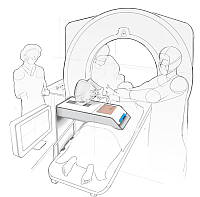 |
Research Group: Assessment and Training of Medical Expert with Objective Standards (ATMEOS)In highly dynamic and complex high-risk domains - such as surgery - systematic training in the relevant skills is the basis for safe and high-quality performance. Traditionally, assessment and training in surgery traditionally concentrated upon proficiency and acquisition of surgeons' technical skills. As the fundamental impact of non-technical skills - such as communication and coordination - is increasingly acknowledged for safe delivery of surgeries comprehensive training approaches are missing. The overall aim of the project is to investigate a novel learning environment for the assessment and training of both technical and non-technical skills of entire multidisciplinary operating room (OR) teams. |
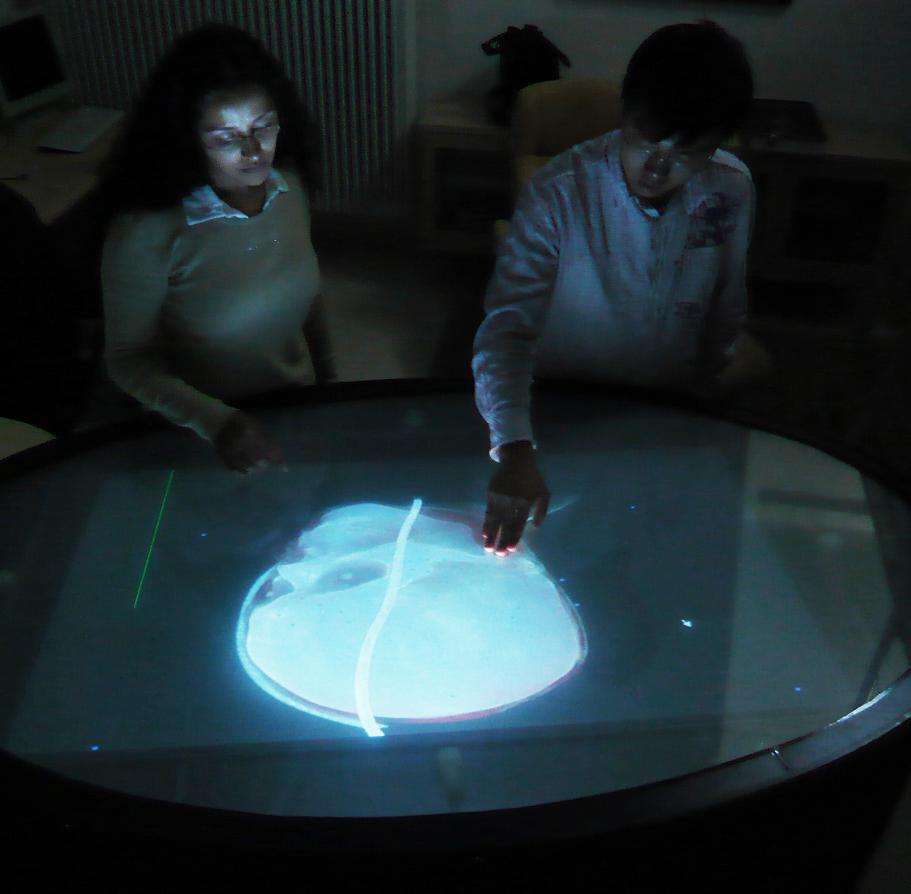 |
MeTaTop A Multi Sensory Table Top System for Medical ProceduresA tabletop system in medical environments can be used for interactive and collaborative analysis of patient data but also as a multimedia user interface within sterile space. For preoperative planning physicians in charge with a particular patient meet to discuss the medical case and plan further steps for therapy. For this reason, they could collaboratively view and browse through all kind of available medical imaging data with the tabletop system. Alternatively such a system could be a central interaction device for all kind of equippment within the OR requiring user input, however, can not be operated by the sterile surgeon. We believe that the projection of all kind of user and information interfaces on a sterile glass plane would facilitate the clinical workflow.This project is strongly related to the Tangible Interaction Surface for Collaboration between Humans project. |
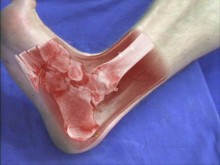 |
3D user interfaces for medical interventionsThis work group aims at practical user interfaces for 3D imaging data in surgery and medical interventions. The usual monitor based visualization and mouse based interaction with 3D data will not present acceptable solutions. Here we study the use of head mounted displays and advanced interaction techniques as alternative solutions. Different issues such as depth perception in augmented reality environment and optimal data representation for a smooth and efficient integration into the surgical workflow are the focus of our research activities. Furthermore appropriate ways of interaction within the surgical environment are investigated. |
| UsersForm | |
|---|---|
| Title: | -none- |
| Circumference of your head (in cm): | |
| Firstname: | Philipp |
| Middlename: | |
| Lastname: | Stefan |
| Picture: |  |
| Birthday: | |
| Nationality: | Germany |
| Languages: | English, German |
| Groups: | Surgical Workflow, Registration/Visualization, Medical Imaging, Computer-Aided Surgery, Medical Augmented Reality, 3D Interaction |
| Expertise: | Surgical Workflow, Registration/Visualization, Medical Imaging, Computer-Aided Surgery, Computer Vision, Medical Augmented Reality, 3D Information Presentation, 3D Interaction |
| Position: | Scientific Staff |
| Status: | Alumni |
| Emailbefore: | stefanp |
| Emailafter: | in.tum.de |
| Room: | |
| Telephone: | |
| Alumniactivity: | |
| Defensedate: | |
| Thesistitle: | |
| Alumnihomepage: | |
| Personalvideo01: | |
| Personalvideotext01: | |
| Personalvideopreview01: | |
| Personalvideo02: | |
| Personalvideotext02: | |
| Personalvideopreview02: | |
